The Pollution Exclusion: Why General Liability Leaves You Exposed
Almost every contractor assumes their general liability policy responds to any damage their work causes. For most claims it does — but buried in the standard ISO form is a broad pollution exclusion that strips out contamination losses entirely. If your operations release, disperse, or discharge a pollutant, the GL carrier can deny the claim outright, and many do.
That exclusion is not a loophole your insurer sneaks in — it is baked into the standard commercial general liability form the entire industry uses. It exists precisely because pollution losses are severe, slow to surface, and expensive to remediate. Contractors Pollution Liability (CPL) is the purpose-built policy that fills the hole the exclusion carves out, covering third-party bodily injury, property damage, and cleanup costs tied to pollution conditions arising from your work.
Two policies, one loss
Think of GL and CPL as complementary halves. GL handles the dropped tool and the trip-and-fall; CPL handles the diesel that soaked into a neighbor's soil and the silica a homeowner breathed during demolition. A contamination claim that GL denies is exactly what CPL is written to pay — and without it, that loss lands on your balance sheet.
What Counts as "Pollution" for a Contractor
The word pollution conjures images of chemical plants and oil tankers, so most contractors assume it does not apply to them. In insurance terms the definition is far broader — it captures ordinary byproducts of everyday trade work. If your crew can stir it up, spill it, or let it drift off site, it can trigger a pollution claim.
- Silica dust — from concrete cutting, grinding, demolition, and sandblasting; a serious respiratory hazard and a regulated one
- Mold and fungi — released or spread during water-damage work, insulation, and interior remodels
- Asbestos and lead — disturbed in older Colorado buildings during demo, renovation, or abatement
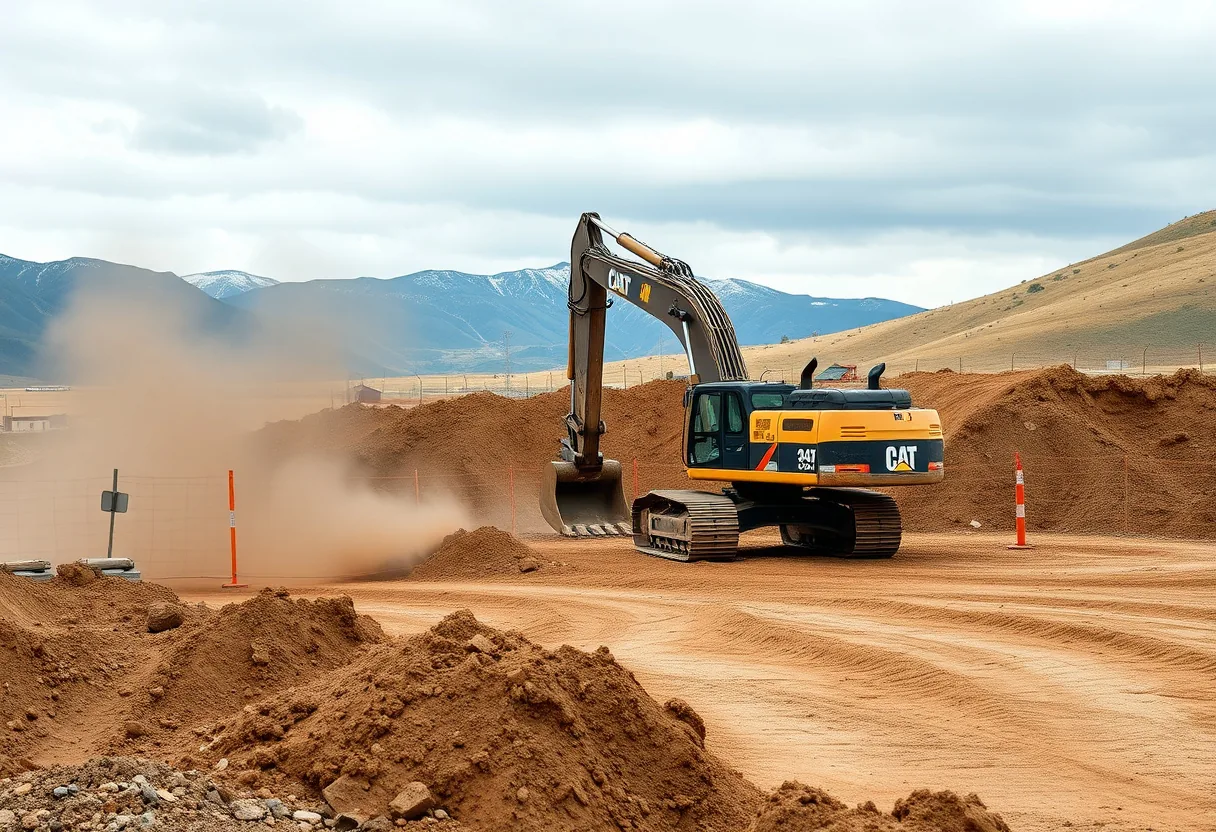
- Fuel and hydraulic spills — diesel, oil, and fluid from excavators, loaders, and equipment on the jobsite
- Sediment and stormwater runoff — soil washing off a graded site into ditches, storm drains, and waterways
- Sewage backups — from plumbing, excavation, and utility work that breaches a line
- Chemicals, solvents, and paint — releases of coatings, adhesives, sealants, and cleaning agents
- Indoor air quality — off-gassing from spray foam, coatings, and finishes affecting occupants
None of these look like a smokestack, and that is exactly the problem. A contractor who would never call themselves a polluter can generate a covered pollution condition on a routine Tuesday — and only CPL responds when they do.
Which Colorado Trades Need Contractors Pollution Liability
Some trades carry pollution exposure on nearly every job; others pick it up on specific tasks. If your work appears below — or touches soil, water, dust, or chemicals in any volume — CPL belongs in your program.
| Trade | Primary pollution exposure |
|---|---|
| Excavation & earthwork | Fuel spills, disturbed contaminated soil, sediment runoff |
| Demolition | Asbestos, lead, silica, and dust dispersal |
| Environmental & remediation | Handling and transporting the contaminants themselves |
| HVAC & mechanical | Refrigerant release, mold, indoor air quality |
| Plumbing | Sewage backups, solvent and chemical releases |
| Insulation & spray foam | Off-gassing, chemical exposure, indoor air quality |
| Painting & coatings | Solvent, paint, and overspray releases |
| Roofing | Adhesive and coating fumes, debris and runoff |
| Concrete & cutting | Silica dust from cutting, grinding, and coring |
| Landscaping & grading | Fertilizer, herbicide, and sediment runoff |
General contractors sit downstream of all of it. Even if a GC never handles a pollutant directly, they inherit the exposure of every sub on the site — which is why prime contracts increasingly push CPL requirements down the chain.
The Colorado Angle: Soil, Stormwater, and Watersheds
Colorado stacks the deck against contractors on pollution risk in ways flatter, wetter states do not. The terrain, the regulatory framework, and the state's mining and wildfire history all raise the odds that a routine job produces a pollution claim.
- Stormwater and sediment — CDPHE construction stormwater permits govern sites disturbing an acre or more, and sediment escaping a graded slope into a ditch or creek is a classic third-party pollution event
- Mine-impacted and contaminated soils — excavation across Colorado's Front Range and mountain corridors can disturb legacy mining contamination or previously polluted ground
- Wildfire debris and remediation — post-burn cleanup, ash handling, and rebuild work carry direct contamination exposure
- Mountain watershed protection — work near streams, reservoirs, and municipal supply watersheds draws intense scrutiny and steep cleanup expectations when something escapes
A sediment plume reaching a protected Colorado waterway is not just an environmental problem — it is a regulatory one, and the cleanup and defense costs that follow are precisely what a CPL policy is built to absorb.
Coverage Forms: How CPL Is Actually Written
Contractors Pollution Liability is not one rigid product — it comes in several forms, and the right structure depends on your trade, your contracts, and how your other policies are built. Understanding the pieces keeps you from buying a policy that looks like coverage but excludes your real exposure.
- CPL for jobsite operations — the core form, responding to pollution conditions arising from your work at the project site
- Contractors E&O + pollution combinations — packaged forms that pair professional liability with pollution, common for design-build and specialty trades; see contractors E&O
- Sudden and accidental vs gradual — some forms cover only abrupt events, others extend to gradual releases that surface over time; the gradual coverage is where cheap policies quietly cut corners
Whatever the form, a sound CPL policy delivers three things: third-party bodily injury and property damage from your pollution conditions, cleanup and remediation costs to make the site right, and legal defense — which on a contested environmental claim can run into six figures before liability is even decided.
Read the trigger, not the brochure
The single most important question on any CPL quote is whether it covers gradual pollution or only sudden and accidental events. A slow diesel seep or a mold problem that surfaces months later is a gradual condition — and a sudden-and-accidental-only form will leave you paying for it yourself. Confirm the trigger in writing before you bind.
Why Owners and General Contractors Now Require CPL
A decade ago CPL was a specialty purchase for environmental firms. Today it shows up as a flat requirement in contracts across the board — because owners and GCs learned the hard way that a sub's pollution claim, once GL denies it, rolls uphill to them.
Prime contracts now routinely name a $1M CPL limit alongside general liability, and require the upper-tier party to be listed as an additional insured. If you cannot produce a CPL certificate at bid time, you do not get the job — the requirement has quietly become as standard as GL and workers' comp on Colorado commercial and public work.
That shift is why carrying CPL is increasingly a revenue question, not just a risk question. The trades that pair GL, builders risk, and CPL into one clean insurance package win the contracts the underinsured competitor cannot even bid.
What Contractors Pollution Liability Costs in Colorado
CPL pricing is driven by your specific exposure, so a painter and an excavation contractor with the same revenue can pay very different premiums. Underwriters weigh a handful of factors and price the tail risk of a contamination event accordingly.
- Trade and operations — demolition, environmental, and earthwork rate higher than low-exposure interior trades
- Annual revenue and payroll — the size of your operation scales the exposure base
- Job types and site conditions — work near water, in older buildings, or on contaminated ground raises the rate
- Limits and deductible — a $1M limit costs more than $500k; a higher retention lowers the premium
- Claims history and controls — documented dust control, spill kits, and stormwater BMPs earn credit
As a rough guide, smaller lower-exposure contractors often see standalone CPL in the low four figures annually, while higher-hazard trades and larger operations pay more as limits and revenue climb. Bundling CPL with your GL frequently prices better than buying it in isolation — the reason it pays to quote the whole program together rather than piecemeal.
The only way to know your number is a real quote against your actual operations. Have your trade, revenue, typical job profile, and current GL details ready and get a quote — or call 844-967-5247 and we will build the program around the work you actually do.