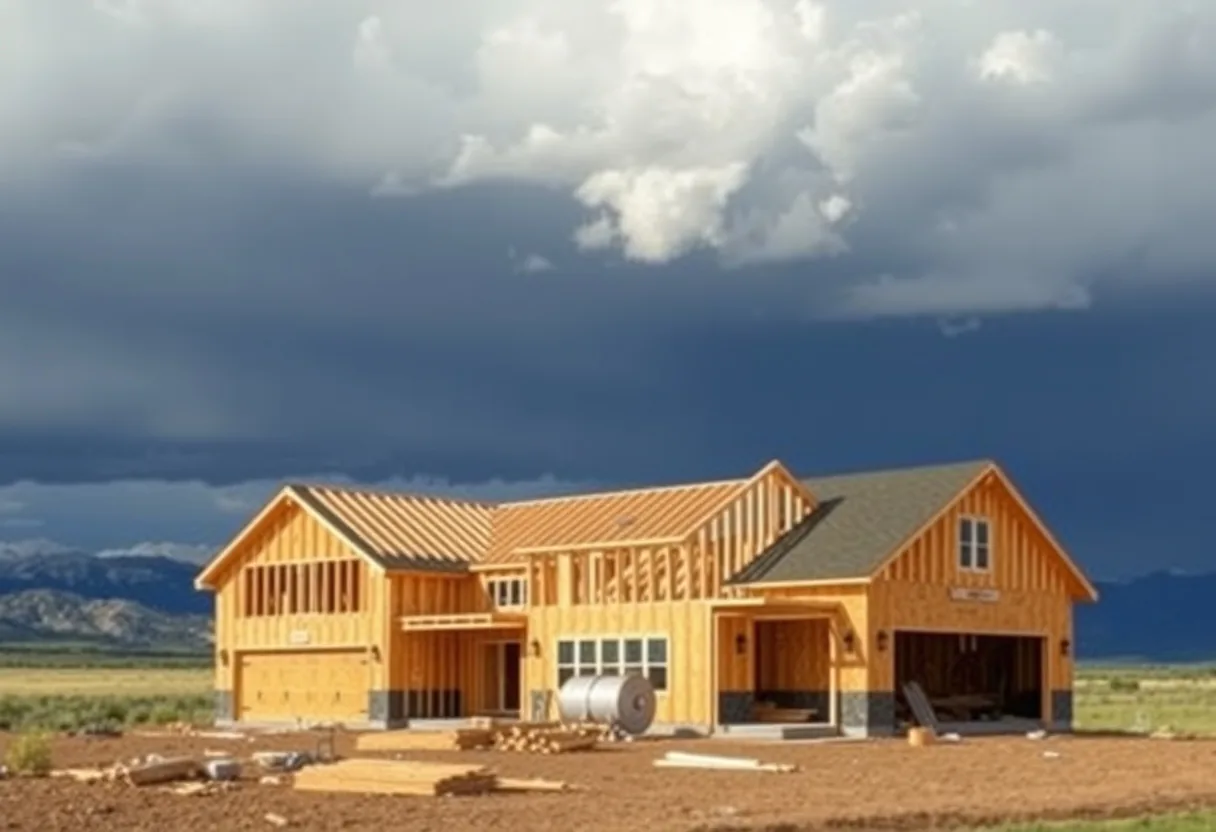
What Builders Risk Insurance Actually Covers
Builders risk — also called course of construction insurance — is property coverage on a structure while it is under construction, along with the materials that go into it. It pays to repair or rebuild when fire, wind, hail, theft, vandalism, or a burst pipe damages the project before it is complete and occupied. Think of it as the property policy for a building that does not exist yet in finished form.
This is a different animal from general liability, which pays third parties when your work injures someone or damages their property. General liability protects other people; builders risk protects your building and your materials. A permanent homeowner or commercial property policy will not fill the gap either — most exclude structures under construction, and the carrier will not bind a standard property policy until the certificate of occupancy is issued.
- The structure itself — framing, foundation, roof, mechanicals, and everything permanently attached as the build progresses
- Materials on site — the lumber, drywall, copper, windows, and appliances staged and waiting to be installed
- Materials in transit and in storage — often covered while en route to the jobsite or held in an off-site yard, subject to sublimits
- Temporary works — scaffolding, forms, falsework, fencing, and temporary structures that support the build
Coverage runs from the day construction starts until the project is finished, sold, or occupied — whichever your policy names first. Once the building is done and handed over, builders risk ends and a permanent property policy takes over.
Why Colorado Weather Makes Builders Risk Non-Negotiable
A finished building has a roof, sealed windows, a locked door, and a security system. A building under construction has none of that — it is open framing, exposed sheathing, and stacked materials sitting in the weather. In Colorado, that weather is exactly the problem.
The Front Range sits in one of the worst hail corridors in the United States. A single spring supercell can shred exposed roof decking, dent metal, and pit siding across an entire jobsite in ten minutes. That same open structure has no defense against the other perils this state throws at a build:
- Heavy mountain snow load — accumulation on unfinished roof trusses and decking causes collapse before the roof is dried in
- High winds and chinooks — downslope gusts flatten framing, peel off sheathing, and scatter staged materials
- Wildfire — a wildland-urban interface build can be lost outright to a fire that never touched a finished home nearby
- Freeze damage — an unheated, un-tempered structure lets pipes burst and green concrete crack when temperatures drop
- Jobsite theft — lumber, copper wire, tools, and uninstalled appliances walk off open sites, a chronic loss in fast-growing metros
Half-built is fully exposed
A home that is 70% complete can represent hundreds of thousands of dollars in labor and materials with zero physical protection from the elements. When a hailstorm or a snow-load collapse hits it, there is no roof to shed the damage and no property policy to pay for it — builders risk is the only thing standing between that storm and your bank account.
What Builders Risk Covers vs. Standard Property Insurance
The reason a standard property policy cannot substitute for builders risk comes down to when each one responds and what each one values. Here is how the pieces line up on a typical Colorado ground-up build.
| What is at risk | Builders risk | Standard property policy |
|---|---|---|
| Structure while under construction | Covered until complete/occupied | Excluded — most will not bind until final CO |
| Materials on site awaiting install | Covered up to the completed-value limit | Not contemplated by a finished-building policy |
| Materials in transit or off-site storage | Commonly covered with sublimits | No |
| Soft costs from a covered delay | Often available by endorsement | No |
| The finished, occupied building | Ends at completion | This is where the permanent policy begins |
Beyond the hard structure, many builders risk forms extend to soft costs — the money a covered loss bleeds even when no lumber is damaged. If a fire or hailstorm sets your schedule back, soft-cost coverage can pick up lost rental income, extra loan interest, re-pulled permits, and additional architect or design fees caused by the covered delay. On a financed project, that endorsement is frequently worth more than the sticker premium.
Who Buys the Policy and How Much to Carry
Builders risk is usually purchased by the general contractor or the project owner — whoever carries the financial exposure if the project burns down mid-build. On many jobs the construction lender contractually requires it before releasing draws, and the lender wants to be named on the policy so its collateral is protected.
The limit you carry should equal the completed value of the project — the total hard cost to finish the structure, not the land and not your profit. Underinsure it and a total loss leaves you paying the difference out of pocket; a coinsurance penalty can shrink even a partial-loss payout. Set the limit to what it costs to rebuild everything the policy covers, from foundation to final trim.
- Named insured — typically the owner or GC who owns the financial risk during construction
- Additional insureds — the construction lender, and often key subcontractors, added so everyone's stake in the structure is protected
- Policy term — matched to the build: 3, 6, or 12 months, with extensions available when the schedule slips
Because Colorado projects slip for weather more than most, ask about the extension provision up front. A build that stalls three weeks for a hail cleanup or a snowed-out pour should not leave you uncovered on the back end — confirm how extensions are priced before you bind, not after the original term runs out.
What Builders Risk Does NOT Cover
Builders risk is broad property coverage, but it has hard edges. The most expensive misunderstanding is assuming it covers everything that can go wrong on a jobsite. It does not — several exposures live on other policies, and knowing the seams keeps you from finding a gap during a claim.
- Faulty workmanship, design, or materials — if the loss stems from bad work or a design error, that is a professional exposure for contractors E&O, not builders risk
- Your tools and equipment — the contractor's own tools, scaffolding you own, and mobile equipment belong on a tools & equipment policy
- Earthquake and flood — both are commonly excluded and usually require a specific endorsement or standalone coverage
- Injuries to people — third-party bodily injury is general liability; employee injury is workers' compensation
- The land and existing structures — the policy insures the new work, not the dirt or a building already standing
The faulty-workmanship line trips up the most contractors. Builders risk will typically pay for ensuing damage — if defective wiring sparks a fire, the fire damage is covered — but it will not pay to rip out and redo the bad wiring itself. That redo is a quality and professional-liability question, which is exactly why builders risk and contractors E&O are meant to sit side by side.
What Builders Risk Costs in Colorado
Builders risk is priced as a one-time premium, typically running 1% to 4% of the hard construction cost of the project. A $500,000 build might see a premium in the low single-digit thousands, paid once for the full term rather than monthly like an ongoing liability policy.
Where you land in that range depends on the risk the structure presents while it is exposed. Colorado underwriters weigh the factors that drive loss frequency and severity in this state most heavily:
- Construction type — wood frame rates higher than masonry or steel because it burns and takes wind and hail damage more readily
- Location — a wildland-urban interface or a high-hail Front Range ZIP prices above a lower-exposure site
- Project value and term — a bigger, longer build sits exposed to weather and theft longer, so it costs more to insure
- Site security — fencing, lighting, and monitoring cut the theft and vandalism loading
- Coverage add-ons — soft costs, higher transit and storage sublimits, and earthquake or flood endorsements each add premium
The premium is small relative to what it protects. One hail event or one snow-load collapse on an uninsured mid-build structure can erase a year of margin — the 1-4% is cheap insurance against a total loss you cannot self-fund. Get a quote with your project value and schedule, or call 844-967-5247 and we will structure the term, limit, and endorsements around your actual build.