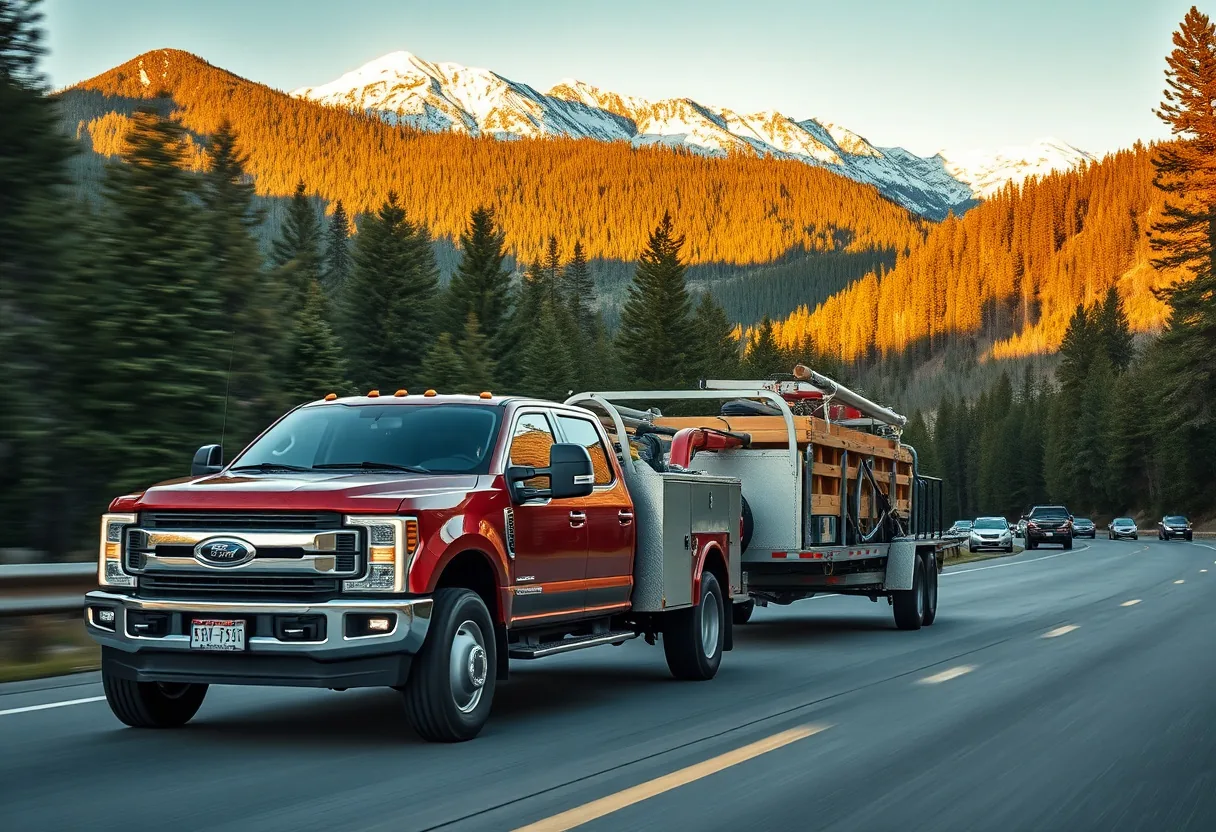
Why a Personal Auto Policy Will Not Cover a Work Truck
The single most expensive mistake a Colorado contractor makes is running a work truck on a personal auto policy. It feels like it saves money — until the day it costs you everything. Personal auto policies exclude vehicles used for business, and every carrier's contract spells it out. When the adjuster learns the F-250 that rear-ended a minivan was hauling your crew and a trailer of tools to a job site, the claim is denied outright.
A denial does not just mean no payout for the other driver's van. It means you personally owe the bodily injury, the property damage, and the legal defense — six figures that come out of your bank account, your home equity, and your business. There is no appeal for using the wrong policy. The vehicle was used for business, the personal policy excluded business use, and that is the end of the conversation.
One paid job is enough to trigger the exclusion
You do not need a fleet or a wrap on the door. A single trip to a job site, a lumberyard run, or hauling a trailer for a paying customer is commercial use. If the vehicle is part of how you make money, it needs a commercial auto policy — full stop.
Commercial auto is built for exactly this exposure: heavier vehicles, trailers, tools on board, employees behind the wheel, and the higher liability limits that general contractors and leases require. Pair it with general liability and you have covered the two ways a contractor most often gets sued.
Colorado Financial-Responsibility Minimums (25/50/15)
Colorado law requires every registered vehicle to carry minimum liability limits written as 25/50/15. Those numbers are the legal floor — enough to keep your plates valid, nowhere near enough to protect a working contractor.
| Limit | What it means | The reality for contractors |
|---|---|---|
| $25,000 | Bodily injury per person | One ER visit and an ambulance can blow past this |
| $50,000 | Bodily injury per accident | A multi-vehicle wreck exhausts it instantly |
| $15,000 | Property damage | Won't cover one late-model truck, let alone a building |
| $1,000,000 CSL | Combined single limit | The de facto standard GCs and leases demand — carry this |
In practice, almost no Colorado contractor carries the state minimum for long. The moment you bid work for a general contractor, sign a commercial lease, or pull a permit on a larger project, you are handed an insurance requirement — and it is almost always $1,000,000 combined single limit (CSL). A CSL is one pooled limit for bodily injury and property damage together, which is why GCs prefer it: it does not split hairs about which bucket a claim falls into.
The premium jump from state-minimum limits to a $1M CSL is smaller than most contractors expect, and it is the difference between qualifying for real work and being told to come back when you are properly insured. For catastrophic losses above the $1M line, stack an umbrella & excess policy on top.
What Commercial Auto Actually Covers
A commercial auto policy is a bundle of coverages, and a Colorado contractor generally needs most of them. Here is what each part does:
- Liability — pays for bodily injury and property damage you cause to others with a covered vehicle. This is the coverage GCs and leases require, and the one that keeps a wreck from becoming a personal lawsuit.
- Physical damage — comprehensive and collision on your own trucks and trailers. Collision pays when you hit something; comprehensive pays for hail, theft, fire, vandalism, and animal strikes. In Colorado, hail alone makes comprehensive non-negotiable.
- Medical payments and UM/UIM — medical bills for you and your passengers, plus protection when the at-fault driver has no insurance or too little. Colorado has a real share of uninsured drivers, so UM/UIM earns its keep.
- Hired & non-owned auto — covers vehicles you rent and, critically, employees running errands in their own cars on company time. A parts run in a worker's personal pickup is a liability exposure your fleet policy alone will not answer.
- Cargo and tools in the vehicle — the trailer, the compressor, the saws riding in the bed. Note that coverage for your gear is really handled by tools & equipment — commercial auto covers the vehicle, not the value of everything loaded in it.
The distinction on that last point trips up contractors constantly: commercial auto pays to repair or replace the truck. The $12,000 of tools stolen out of the bed at a job site is a tools & equipment claim, not an auto claim. Carry both, and confirm with your agent exactly where the line sits.
Colorado Factors That Drive Your Premium
Colorado is not an easy state to insure a fleet in, and the reasons are geographic. Underwriters know it, and they price for it:
- Hail — the Front Range sits in Hail Alley, one of the most hail-prone corridors in the country. A single storm can total the windshields, panels, and roofs of an entire parked fleet in ten minutes. Comprehensive coverage is what pays for it, and Colorado hail is the biggest reason contractors here carry it.
- Mountain-pass driving — loaded trucks descending Vail Pass, Wolf Creek, or Berthoud with a trailer behind them face brake fade, steep grades, and long runouts. Severity of loss climbs with elevation, and so does the rate.
- Winter and ice — black ice, whiteouts on I-70 and I-25, and short winter daylight raise both frequency and severity of claims from November through April.
- Gravel and backcountry job sites — mountain and rural sites mean washboard roads, rock chips, rollovers, and getting stuck. Comprehensive and collision both see more use off the pavement.
- Altitude — thinner air affects braking and engine performance on grades, and long high-elevation hauls factor into how a vehicle is rated.
None of these are reasons to skip coverage — they are reasons the coverage exists. A contractor who parks a fleet on the Front Range without comprehensive is one storm away from a five-figure hail loss with no policy behind it.
Business Auto Symbols, Adding Vehicles, and MVRs
Commercial auto policies use numbered coverage symbols to define which vehicles a coverage applies to. The one to know is Symbol 1 — "any auto." Symbol 1 gives you the broadest liability protection: it covers owned, hired, non-owned, and even newly acquired vehicles automatically. For a growing contractor buying trucks through the year, Symbol 1 liability closes the gaps that a narrow vehicle-schedule symbol leaves open.
Physical damage, by contrast, usually attaches to specifically described autos (Symbol 7) — you schedule each truck and trailer by VIN and stated value. That is why adding a vehicle is a phone call you make before it hits the road, not after. A new dump truck that is not on the schedule has no collision or comprehensive coverage the day you drive it off the lot.
Every driver's MVR is part of your rate
Underwriters pull the motor vehicle record of everyone who drives your trucks. One employee with a DUI, a speeding pattern, or an at-fault wreck can raise the whole policy or get that driver excluded. Vet MVRs before you hand over the keys — a bad record on a good hire is expensive to discover after a claim.
Radius matters too. A crew that stays inside a 50-mile local radius rates very differently than one running trucks from Denver to the Western Slope and back. Declare your true operating radius; a policy rated for local work will not respond cleanly to a long-haul loss, and the mismatch surfaces at the worst possible moment.
What Commercial Auto Costs for Colorado Contractors
Cost depends on the vehicle, the driver, the limits, and where the truck is garaged — but here are realistic ranges Colorado contractors see per vehicle, per year:
| Vehicle type | Typical annual range | Main cost driver |
|---|---|---|
| Work van or 1/2-ton pickup | $1,600 - $2,800 | Driver MVR and radius |
| 3/4- or 1-ton work truck | $2,200 - $3,800 | Weight, trailer, limits |
| Flatbed with trailer | $2,800 - $5,000 | Cargo weight and radius |
| Dump truck | $4,500 - $9,000+ | Weight class and off-road use |
The levers that move those numbers most: your chosen liability limit (state minimum vs $1M CSL), driver records across everyone who gets behind the wheel, radius of operation, vehicle weight and value, whether you carry full physical damage, and your garaging ZIP — a truck parked in a hail-heavy Front Range ZIP rates higher than the same truck on the Eastern Plains. Loss history and years in business round it out.
Bundling matters. Writing your commercial auto alongside general liability, tools & equipment, and workers' compensation with one carrier usually earns package credits and keeps every certificate consistent for the GCs asking for them.
Get a Colorado Commercial Auto Quote
We write commercial auto for Colorado contractors of every size — the solo painter with one van, the framing crew running three trucks and a gooseneck, the excavator with a dump truck and a lowboy. We know what GCs on Front Range projects require, and we build the policy to clear their insurance checklist the first time.
Have your vehicle list (year, make, model, VIN, weight), your drivers' license numbers, your operating radius, and the limits your contracts require ready, then get a quote — or call 844-967-5247 and talk to someone who understands why a Colorado contractor needs comprehensive more than most. If a certificate has to be in a GC's inbox this week, tell us up front and we will move it to the front of the line.