The Confusion That Costs Contractors Real Money
Ask ten Colorado contractors whether their general liability policy would rebuild a half-framed house after a hailstorm, and a surprising number say yes. It would not. General liability and builders risk are two completely different products that protect two completely different things — and assuming one covers the other is one of the most expensive mistakes a builder can make.
The confusion is understandable. Both show up on the same job, both get bundled into the same insurance conversation, and both are things a general contractor is expected to carry. But one protects other people from you, and the other protects your project from the world. Get that distinction wrong and you can find yourself paying out of pocket to rebuild work you already framed once.
General Liability: Protecting Other People From You
General liability is third-party coverage. It responds when your work causes bodily injury or property damage to someone else — a visitor, a client, a neighbor, a passerby. If a subcontractor's tool falls off a scaffold and hits a homeowner, or your crew backs a trailer through a fence next door, general liability is the policy that pays their medical bills, their repairs, and the legal defense if they sue.
- Bodily injury — someone who is not your employee gets hurt on or near your jobsite
- Property damage — you damage property that belongs to someone else
- Legal defense — attorney fees and court costs, which pile up fast even on a claim you eventually win
Here is the part contractors miss: general liability does not pay to rebuild your own project. The house you are framing is not a third party — it is your work product. When hail shreds the roof deck you just installed, that is your loss, not a liability claim, and general liability sits it out entirely. Learn more on our general liability page.
Builders Risk: Protecting the Project Itself
Builders risk is first-party property coverage for the structure under construction and the materials that go into it. It covers the building itself while it is being built — plus lumber, fixtures, and supplies on site, in transit, or in temporary storage — against sudden physical loss until the project reaches completion.
Think of it as insurance on the thing you are creating, not on the people around it. If a covered peril damages the work in progress, builders risk pays to repair or rebuild it so the project can move forward instead of stalling out while you eat the cost.
- Hail and wind — a Front Range specialty, covered while the structure is exposed and unfinished
- Fire — including wildfire, a growing threat on foothill and mountain lots
- Theft and vandalism — materials walked off an open jobsite overnight
- Other sudden perils — depending on the form, things like vehicle impact and certain water damage
Coverage generally runs from groundbreaking until the project is complete and occupied — then the owner's permanent property policy takes over. See the full breakdown on our builders risk page.
Side by Side: How the Two Policies Compare
The cleanest way to keep these straight is to line them up on the same questions. Notice how rarely they overlap — that is exactly why one cannot stand in for the other.
| Question | General Liability | Builders Risk |
|---|---|---|
| What does it protect? | Other people and their property | The structure under construction and its materials |
| Who does it protect? | Third parties — clients, visitors, neighbors | You and often the owner and lender (first party) |
| When does it apply? | Any time your operations cause harm to others | From groundbreaking until the project is complete |
| What triggers a claim? | You injure someone or damage their property | Hail, wind, fire, theft, or vandalism hits the job |
| Who typically buys it? | The contractor, carried year-round | The contractor or owner, per project or blanket |
| Coverage term | Ongoing annual policy | Length of the build, then it ends |
Four Colorado Scenarios That Make It Click
The difference stops being abstract the moment you put it on a real Front Range jobsite. Same project, four losses, two very different policies:
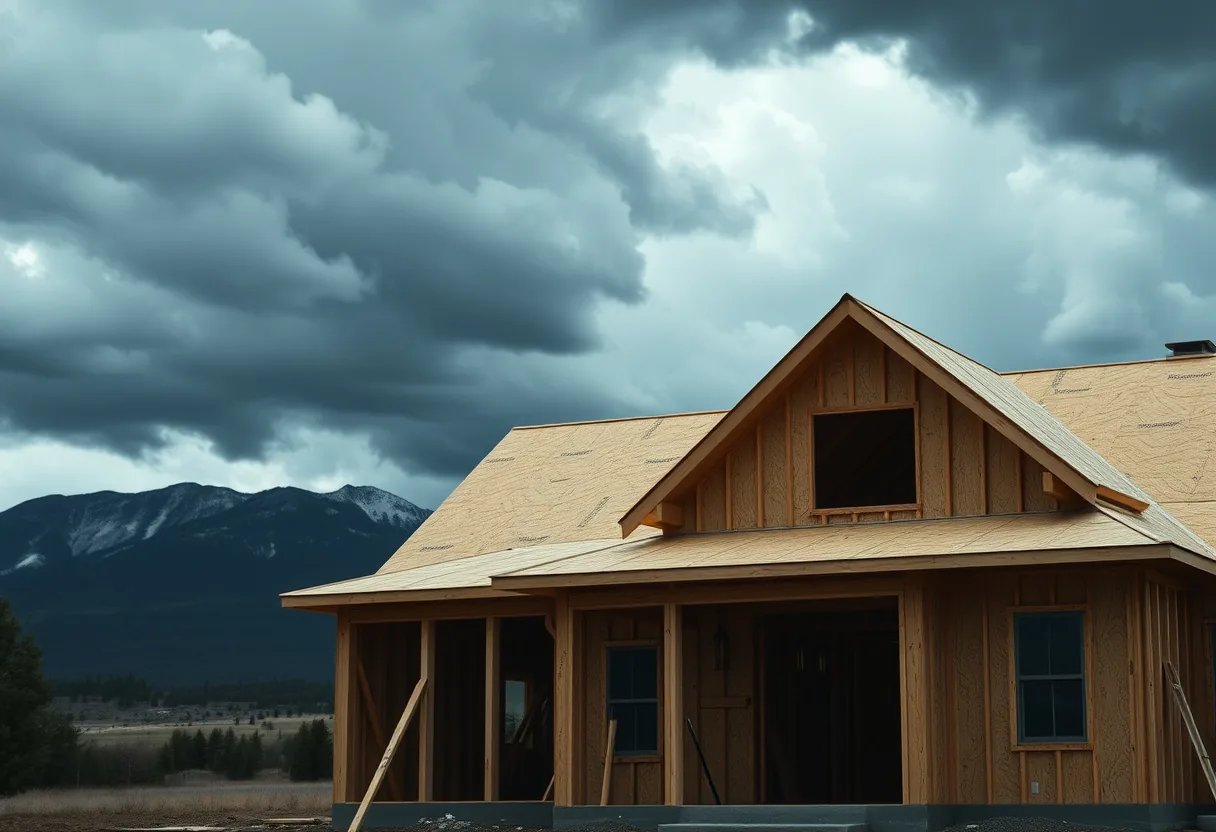
- A June hailstorm shreds the roof deck and OSB mid-build. The structure itself is damaged before it is dried in. That is your project taking the hit — a builders risk claim, not a liability one.
- A visitor trips over your extension cords and is injured. A third party is hurt by your operations. That is textbook general liability.
- Framing lumber is stolen off the jobsite overnight. Your materials, gone before they were installed. Builders risk covers the theft.
- Your crew backs into and damages the neighbor's fence. You damaged property belonging to someone else. That is general liability again.
The tell that sorts every claim
Ask one question: was MY work or MY materials damaged, or did I harm SOMEONE ELSE? Damage to the project you are building points to builders risk. Harm to a third party or their property points to general liability. Almost every jobsite loss sorts cleanly on that single question.
Why Colorado Makes Builders Risk Non-Negotiable
In a mild-weather state, some builders roll the dice on builders risk. In Colorado, that gamble is reckless. The Front Range sits inside Hail Alley — the corridor from the Rockies through the eastern plains that racks up some of the most frequent and destructive hail in the country. An unfinished structure with an exposed deck and open framing is exactly what hail loves to destroy.
- Hail — spring and summer storms can total an exposed roof deck in minutes
- Snow load — heavy wet snow stresses partially built structures before they are fully braced
- Wildfire — foothill and mountain lots face real seasonal exposure
- Jobsite theft — copper, lumber, appliances, and fixtures walk off open sites statewide
Every one of those perils hits the project itself — the exact thing general liability refuses to touch. In this climate, builders risk is not a nice-to-have; it is the policy standing between a bad-weather week and a rebuild you pay for twice.
The Bottom Line: Most Colorado Projects Need Both
These policies are not competitors — they are partners. General liability handles the people and property around your work. Builders risk handles the work itself while it is going up. Drop either one and you have left a large, predictable gap open on a Colorado jobsite.
There is a third piece most builders should add: [tools & equipment](/coverage/tools-equipment/) coverage for the gear you own and haul from site to site. Builders risk covers the materials becoming the building; tools and equipment covers the compressors, generators, and hand tools that build it. Together, the three cover the people, the project, and your livelihood.
A simple coverage stack for CO contractors
General liability for third-party claims, builders risk for the structure under construction, and tools & equipment for your gear. Most Colorado projects need all three working together — not one standing in for the others.
Not sure what your current policy actually covers? Get a quote or call 844-967-5247 and we will walk your jobsite exposures line by line. For real pricing ranges, see our cost guide.
This article is general information for Colorado contractors, not legal advice. Coverage terms, exclusions, and limits vary by policy and carrier — always confirm the specifics with your agent before you rely on any one of these policies to respond.
Frequently Asked Questions
No. General liability is third-party coverage — it pays when your work injures someone else or damages property that belongs to someone else. The structure you are building is your own work product, not a third party, so damage to it is never a general liability claim. That is exactly what builders risk exists to cover.
Builders risk. Hail striking your unfinished structure or its materials is first-party property damage to the project itself, and builders risk is built to cover hail, wind, fire, theft, and vandalism during construction. General liability sits it out entirely because no third party was harmed — only your own work in progress.
For most projects, yes. General liability handles third-party injury and property damage claims, while builders risk protects the structure and materials against Colorado's hail, snow load, wildfire, and jobsite theft. They cover different risks with almost no overlap, so carrying one leaves a large, predictable gap open on the other.
Either can, and the contract usually spells out who is responsible. On many custom and spec builds the general contractor carries it; on owner-financed projects the owner or lender may require it in their name with the contractor added. What matters is that someone insures the project during construction and that you confirm it in writing before work starts.
Builders risk is temporary by design. It runs from groundbreaking until the project is complete and typically occupied, at which point the owner's permanent property policy takes over. Because it is tied to the build, you buy it per project or as a blanket program covering multiple jobs, rather than as a standing year-round policy like general liability.
Generally no. Builders risk covers the materials that become the finished structure, not the compressors, generators, and hand tools you own and move between sites. Those need a separate tools and equipment policy. Pairing builders risk with tools & equipment coverage protects both the project you are building and the gear you use to build it.